How to Read Nutrition Labels Clearly
Master the standardised information displayed on food packages to understand exactly what you're consuming.
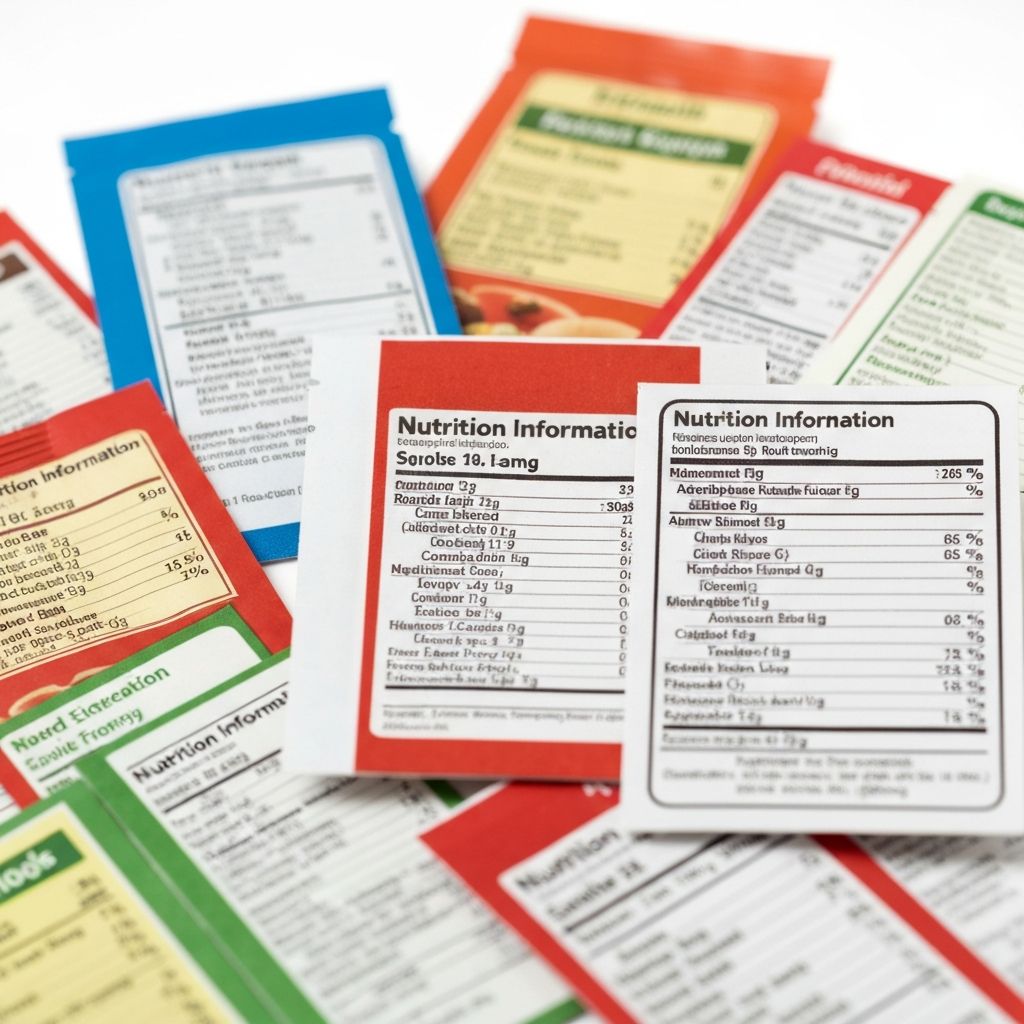
Understanding UK Nutrition Labels
In the United Kingdom, food packages carry standardised nutrition information panels. These panels provide factual data about food composition, allowing you to make informed choices based on precise information.
The Key Components
1. Serving Size and Servings Per Container
All other information is expressed relative to a defined serving size. Understanding the serving size is critical—the numbers change if you consume multiple servings.
What to note: Check whether the serving size matches your typical consumption. A package might contain 2 servings, but you might typically consume the entire package.
2. Energy Content (Calories)
Displayed in kilocalories (kcal) or kilojoules (kJ). This represents the total energy provided by one serving.
What to note: This is the sum of energy from all macronutrients. If you consume double the serving, you consume double the energy.
3. Fat
Total fat content is listed, often with a breakdown of saturated fat. Fat provides 9 calories per gram.
What to note: Total fat includes all types (saturated, unsaturated, trans). Current scientific guidance suggests limiting saturated fat to approximately 10% of daily energy intake for most people.
4. Carbohydrates
Total carbohydrates are listed, often with breakdowns of sugars and fibre. Carbohydrates provide 4 calories per gram.
What to note: Fibre is a carbohydrate that the body cannot digest, affecting net energy and providing other physiological benefits. Sugars are rapidly absorbed carbohydrates.
5. Protein
Protein content is listed in grams. Protein provides 4 calories per gram. Protein serves structural and functional roles beyond energy.
What to note: Adequate protein intake supports muscle maintenance, enzyme production, immune function, and numerous other processes.
6. Salt (Sodium)
Salt content is listed. Current guidance recommends limiting salt to approximately 6 grams per day for adults (about 2,400 mg sodium).
What to note: Most dietary salt comes from processed foods rather than added salt at home.
7. Micronutrients
Some labels include information on vitamins and minerals (iron, calcium, vitamins, etc.). This varies by product.
What to note: These provide context on nutrient density—what additional nutritional value the food offers beyond macronutrients and energy.
How to Use Labels Effectively
Step 1: Check the Serving Size
Is the serving size realistic for your consumption? If you always consume double the stated serving, mentally double the numbers.
Step 2: Assess Energy Content Relative to Portion
Is this a high-energy or low-energy food? Does the energy match your expectations based on ingredients?
Step 3: Examine Macronutrient Distribution
What percentages are carbohydrate, protein, and fat? Is the distribution appropriate for your needs and preferences?
Step 4: Identify Added Sugars (if listed separately)
Some labels distinguish between naturally occurring and added sugars. Added sugars are noted in brackets on UK labels.
Step 5: Check Salt/Sodium Content
Is this product high in salt? Does it fit within your daily salt target?
Reference Intakes
Labels often display "Reference Intakes"—the amount of each nutrient a typical adult should consume daily. These are general guidelines applicable to most adults.
Individual needs vary. Active individuals may require more calories and protein. People with specific health conditions may require different targets. Use reference intakes as a general framework, not absolute requirements.
Practical Application
Label reading provides clarity on food composition. It removes guesswork and allows evidence-based decisions about food choices. Over time, you'll develop familiarity with the energy density and macronutrient distribution of common foods.
This skill is particularly valuable for understanding how different foods contribute to daily energy and nutrient intake—essential knowledge for managing energy balance and nutritional adequacy.